


There's a moment almost every woman who has ever worn a real silk blouse knows: You put it on, step in front of the mirror – and immediately understand why silk has been considered the fabric of kings for millennia. The feel, the sheen, the way the fabric drapes. Nothing feels quite like it.
And then summer arrives. Temperatures rise, and suddenly there's uncertainty: Can you even wear silk in the heat? Doesn't it stick? Isn't it much too delicate for everyday wear?
The answer surprises many: Silk isn't wearable despite the heat – it's ideal *because* of the heat. You just need to know why. And how.
What silk really does in the heat – and why it's so clever
Silk is a natural fiber, and natural fibers regulate temperature in a way no synthetic fabric can replicate. Specifically, this means: Silk absorbs moisture – up to 30 percent of its own weight – without feeling wet or heavy. It wicks moisture away from the body, allows air to circulate, and cools the skin.
The result: At 30 degrees Celsius, you feel cooler in a silk blouse than in a cotton T-shirt. Not warmer. Cooler.
Additionally, silk is naturally antibacterial – which means it develops unpleasant odors less quickly than synthetic fabrics. A clear advantage for warm days.
The only thing silk needs: the right cut and – for some body types and temperatures – the right support against the infamous sticking. We'll get to that in a moment.
Styling silk: The most beautiful summer looks
The silk blouse – the most versatile piece in your wardrobe
A silk blouse is the piece that takes less than three minutes in the morning and still always looks good. Open over a swimsuit as an elegant beach cover-up. Loosely with linen pants for a relaxed lunch in the city. Buttoned up and slightly tucked in for an evening aperitivo.
What makes a good silk blouse so valuable: Its effect changes with the light. During the day in the sun, it shimmers subtly and freshly. In candlelight in the evening, it takes on a warmth and depth no other fabric possesses. You wear the same piece – and still look different twice.
*Styling tip:* Choose silk blouses in your neutral colors – off-white, sand beige, deep blue, or a warm terracotta. This way, they combine with everything in your wardrobe and become a true go-to.
Discover our silk collection →
The silk dress – a complete outfit, zero effort
A good silk dress is the piece for which you always wonder afterwards why you waited so long. It feels comfortable all day long – morning, noon, evening. It hardly wrinkles. It dries quickly after hand washing. And it always looks good in photos.
For summer: Choose flowing cuts that don't cling to the body – wide A-line, wrap style, or a straight silhouette with movement. The more air between the fabric and your skin, the cooler it feels.
Silk as an accessory – for a gentle introduction
If you're not ready for a full silk outfit yet: A silk scarf is the perfect starting point. As a headband, around the neck, on your bag, or as a belt – a silk scarf costs little, weighs nothing, and instantly elevates any look.
The clinging problem: What really helps
Now to the topic that bothers many but few openly discuss: Silk clinging to the body in the heat. It happens – especially with close-fitting cuts, very high temperatures, or when you sweat. And it's annoying because it visually spoils even the most beautiful dress.
The good news: There are simple, effective solutions.
Solution 1: The right cut – prevention over treatment
The most effective way to prevent clinging is to avoid it from the outset. Flowing, loose cuts with space from the body simply cling less than tight, body-hugging models. When buying, pay attention to air circulation: Wide sleeves, flared skirts, loose blouses. The more the fabric can move, the less contact with the skin – the less clinging.
Solution 2: Anti-static spray or fabric starch
Anti-static sprays for clothing – also known as "Static Guard" or anti-cling spray – are the simplest remedy for clinging silk. Simply spray it on the inside of the fabric, let it dry briefly, done. The spray reduces the static charge that sometimes makes silk cling to the body and keeps the fabric moving.
Alternatively: light fabric starch, sprayed on the inside of the dress. This also helps the fabric maintain its shape and not cling to the body.
Solution 3: A slip or underskirt as an invisible layer
The most classic and reliable solution: a thin slip or a silk underskirt underneath. This sounds old-fashioned – but it works perfectly. The underlayer lies against the body, and the silk glides over it without direct skin contact. No clinging, no transparency, comfortable to wear all day long.
Important: The slip should be made of a smooth, light fiber – ideally also silk or fine lyocell. Rough or thick fabrics underneath cancel out the effect of the silk dress.
Solution 4: Body powder or talc
A thin application of unscented body powder or talc on areas prone to clinging – thighs, stomach, back – significantly reduces friction between skin and fabric. The powder also absorbs light moisture and keeps the skin drier, further preventing clinging.
This method is particularly practical for on the go: A small powder compact in your bag, re-powder as needed. No scent, no visible effect, immediate results.
Solution 5: Lower the temperature
Silk clings most when the body sweats. What helps: Air conditioning, shade, a cool drink – but also cool water briefly run over your wrists. The pulse points cool the blood and thus the entire body in seconds. Sounds minimal, but actually helps.
Caring for silk – the essentials in brief
Silk is less delicate than its reputation suggests – if you follow a few basic rules. Many silk pieces are even machine washable on a gentle cycle. The label is your best friend – read it before you decide.
For all details on washing, drying, ironing, and proper storage of silk, we have our own comprehensive guide: Properly care for silk styles – so everything runs smoothly →
Frequently asked questions about silk in summer
Can you really wear silk in the heat? Yes – silk is even particularly well-suited for hot days. The natural fiber regulates temperature, wicks moisture away from the body, and cools the skin. With the right fit, you feel cooler in silk at 30 degrees Celsius than in cotton.
What to do if silk clings to your body? The most effective remedies: choose loose cuts, spray anti-static spray on the inside, wear a thin slip underneath, or apply body powder to the skin. All four methods work – depending on the situation and preference.
Isn't silk too warm in summer? No – that's the most common misconception about silk. As a natural fiber, silk actively regulates body temperature. It warms in the cold and cools in the heat. Therefore, silk is often more comfortable to wear in summer than synthetic fabrics or even cotton.
Which cuts are best for hot days? Loose, flowing cuts with space from the body: flared dresses, wide blouses, palazzo pants. The more air that can circulate between the fabric and the skin, the cooler it feels.
Can I take silk with me when traveling? Absolutely – silk is even ideal for travel. It hardly wrinkles, dries quickly after hand washing, and is lightweight. Any wrinkles can be smoothed out in seconds with a compact travel steamer.
Silk is not a luxury for special occasions – it's everyday
The biggest mistake you can make with silk: leaving it hanging in the closet "for a special occasion." Silk is too beautiful and too comfortable to be worn only every few months.
Wear it for breakfast on the terrace. For Saturday shopping. For an evening stroll. For work on Monday. Silk makes every moment special – precisely because it feels so natural.
Discover our silk collection – from silk blouses to silk dresses and silk scarves. All in qualities that feel as good as they look.


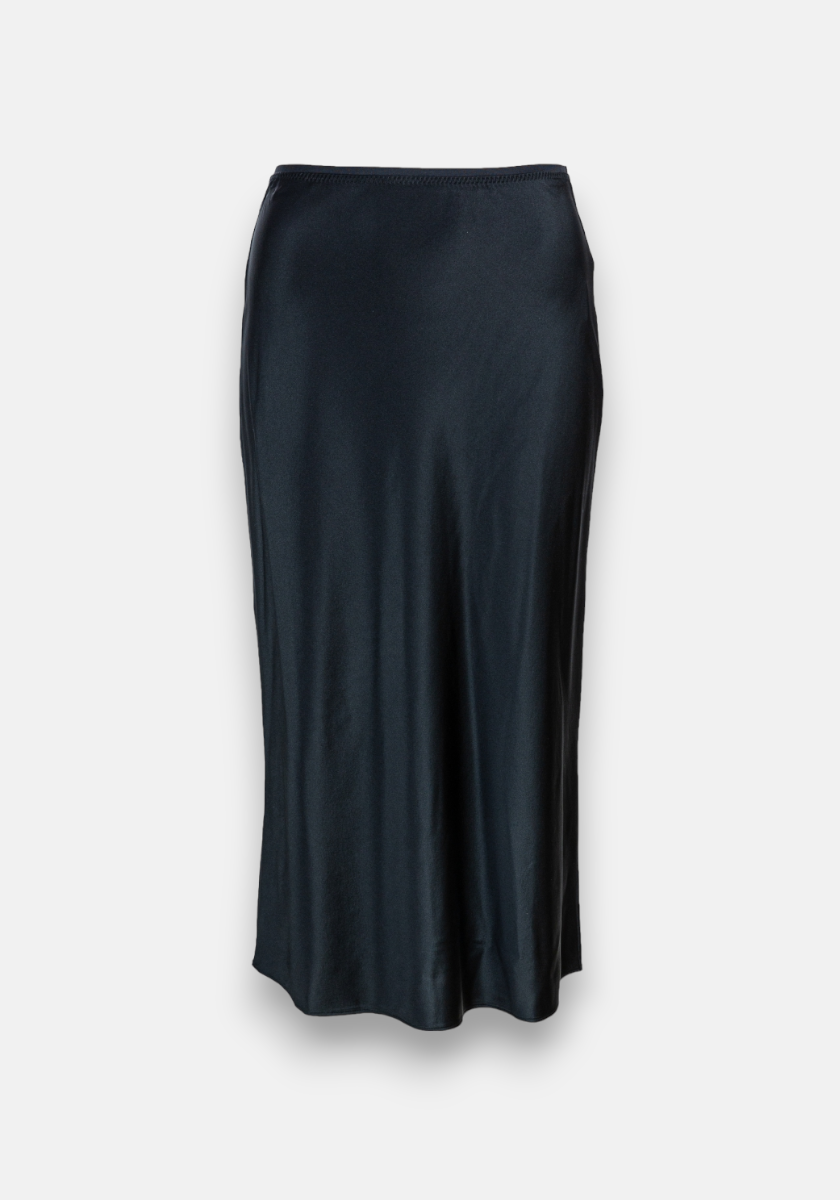

Black silk skirt
Black silk skirt
1 color available